Halmann Vella at St John’s Co-Cathedral Museum
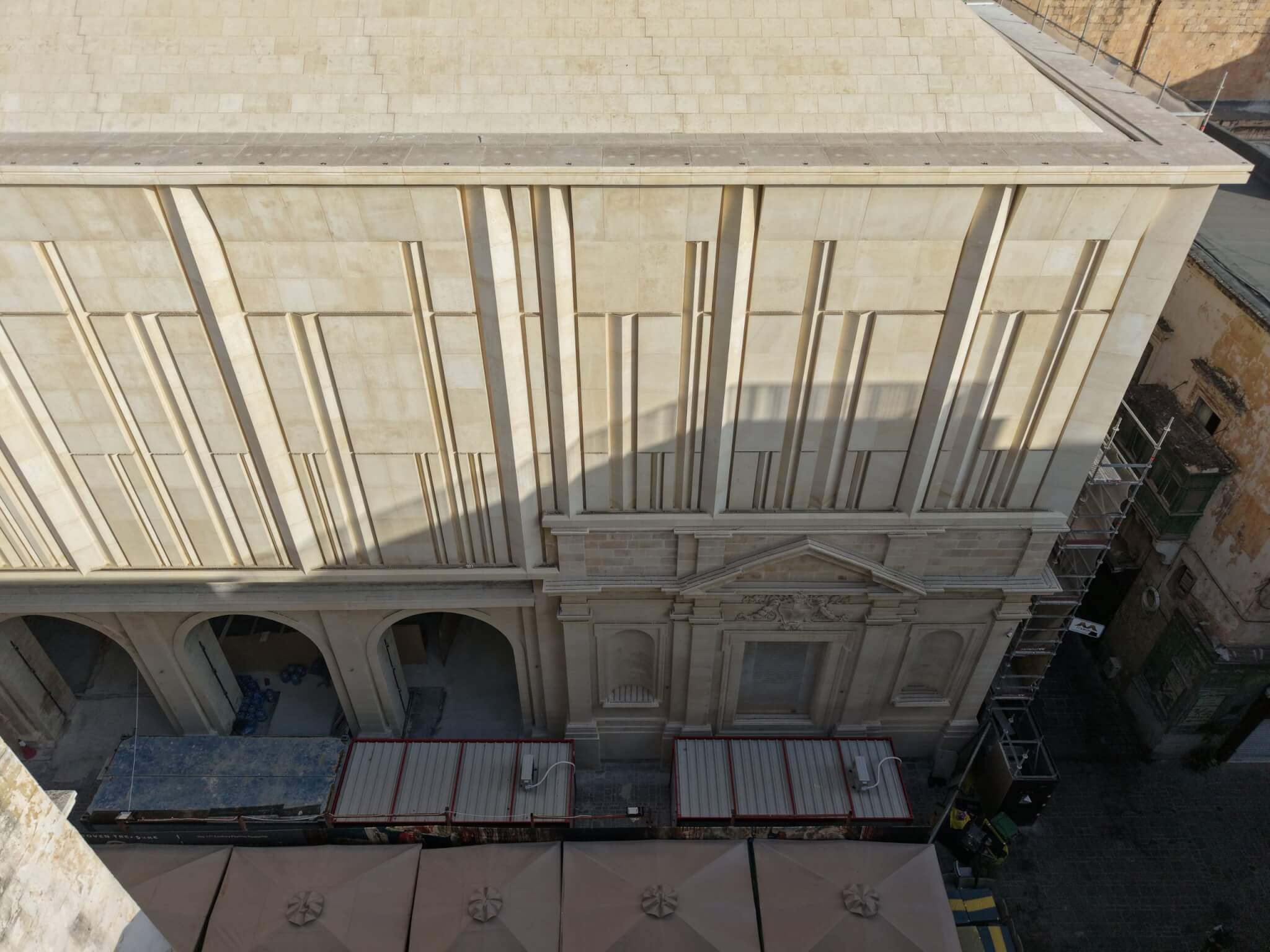
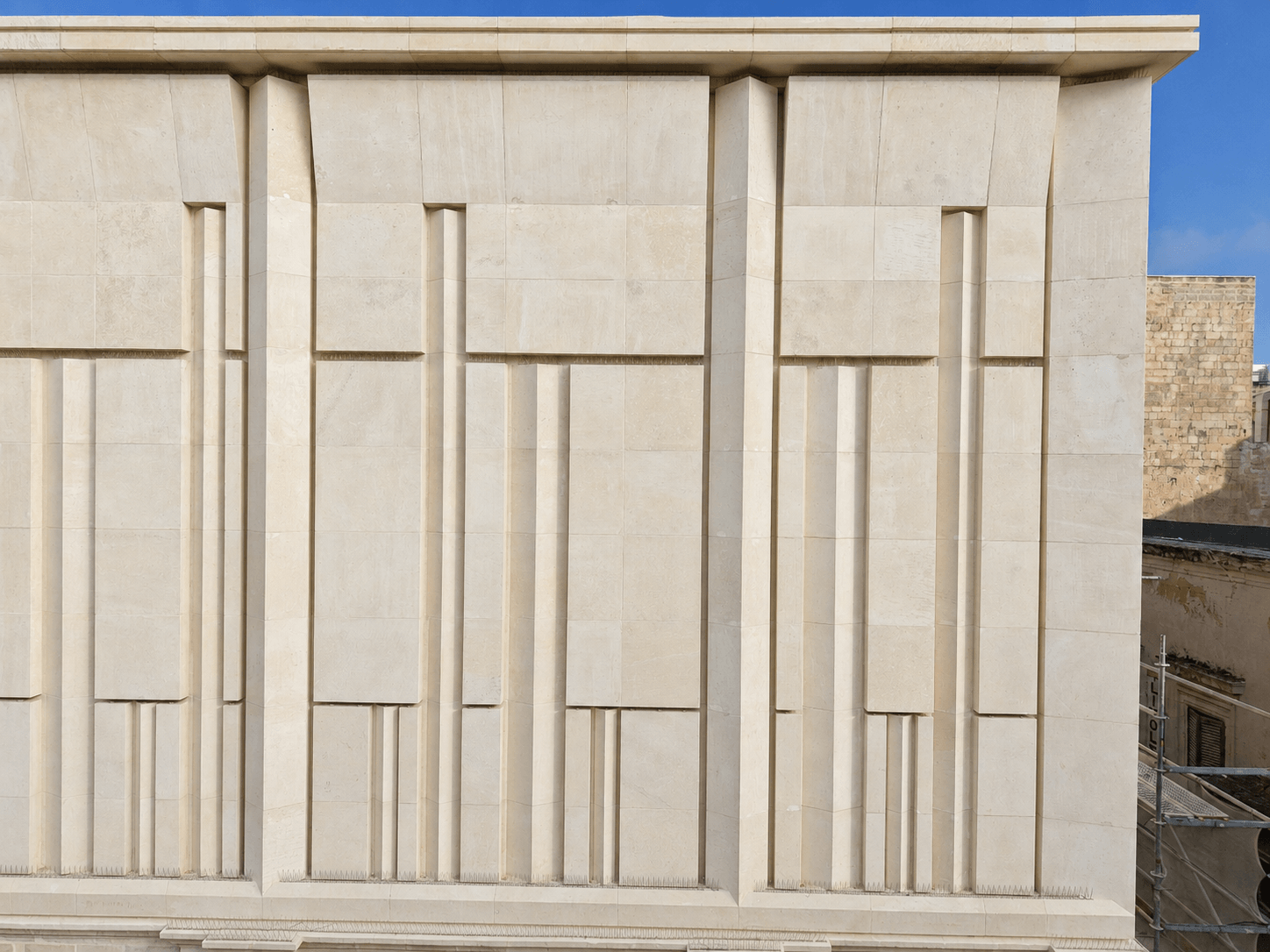
Halmann Vella played a pivotal role in transforming the architectural façade concept into a robust, buildable and durable stone system. Drawing on decades of façade engineering experience and knowledge gained from comparable landmark projects, the team developed bespoke technical solutions tailored specifically to the constraints and requirements of St John’s Co‑Cathedral Museum.
Each solution was not only designed for constructability, but also rigorously tested within dedicated testing facilities to verify structural integrity, fixing performance, handling safety and long-term durability. This testing phase ensured that the façade system would perform reliably both during installation and across decades of exposure as part of the historic fabric of St John’s Co‑Cathedral.
Stone Selection and Quarrying
The selection of natural globigerina limestone presented inherent challenges. As a living material, limestone varies in strength, grain, colour, and durability—factors magnified by the large block sizes and high quality demanded by the design.
Meeting these requirements was only possible through close collaboration with reliable quarry operators equipped with advanced extraction technology, allowing stone to be quarried with the dimensional accuracy and consistency required for digital fabrication. Halmann Vella’s expertise ensured that only suitable stone was selected, balancing structural performance with visual continuity.
Design Development and Digital Fabrication
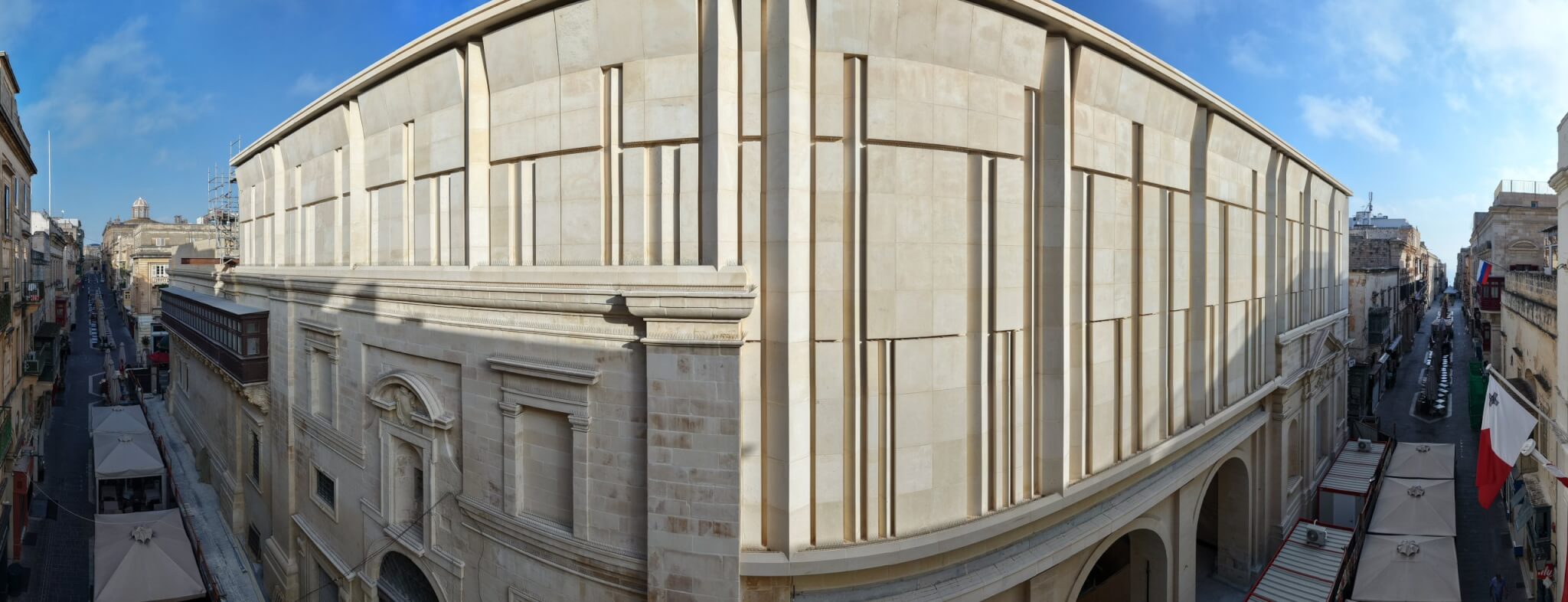
The entire project was developed using advanced digital fabrication workflows, with a single coordinated digital model serving as the source for more than 2,300 uniquely defined limestone blocks. Each stone element was individually engineered and fabricated rather than standardised or repeated.
Fabrication combined robotics, CNC diamond wire cutting, and CNC milling, supported by a skilled team of craftsmen who carried out final finishing and quality control. This hybrid approach allowed technological precision to be paired with traditional stone craftsmanship, enabling the complex façade geometry to be realised faithfully and efficiently.
Installation Strategy within an Urban Context
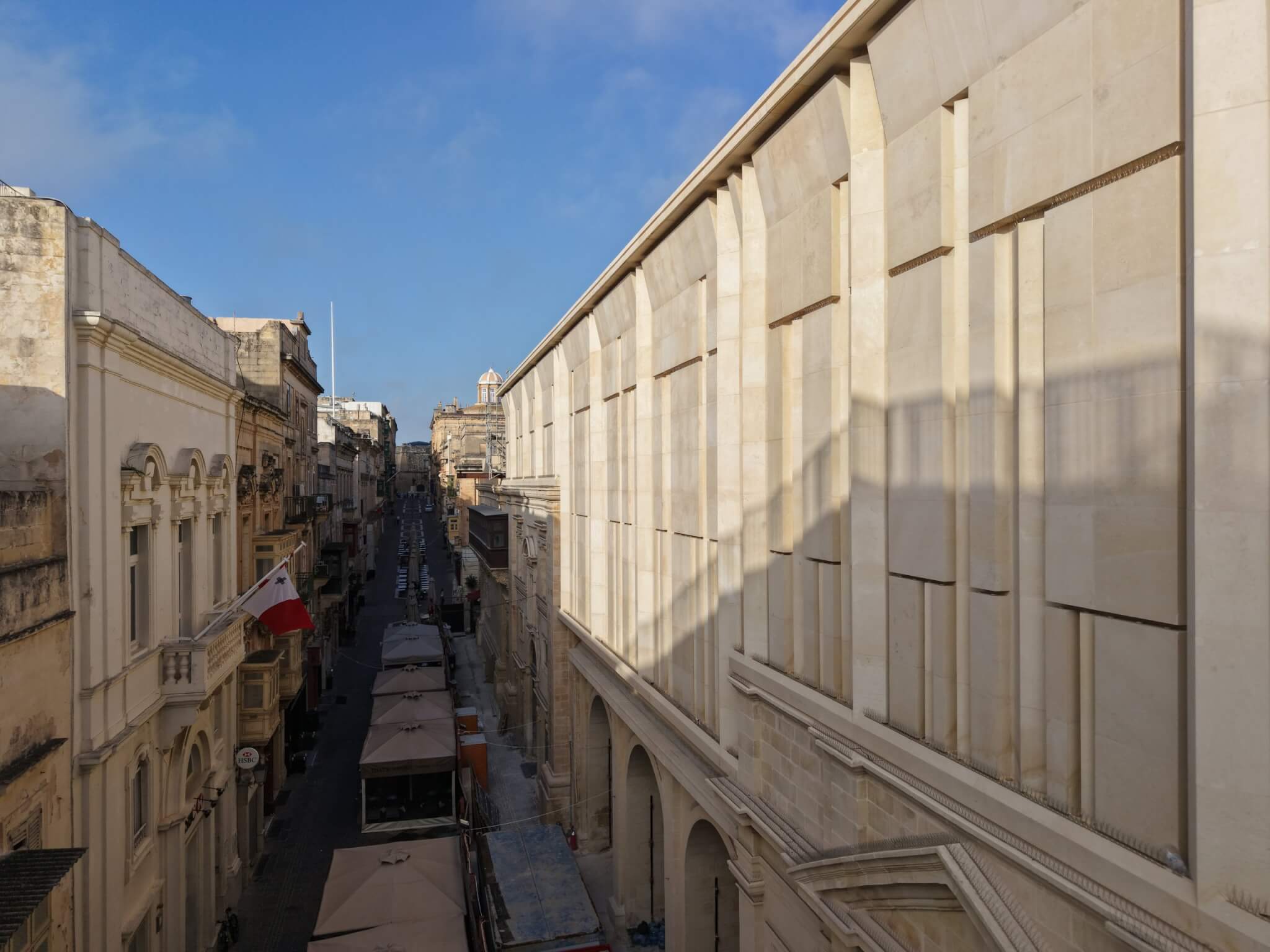
Executing the installation within the historic core of Valletta required careful logistical planning, with a strong emphasis on minimising disruption to the surrounding community. All deliveries were scheduled for early morning hours, reducing impact on public movement and daily activity in Malta’s capital city.
Custom‑designed anchoring and fixing systems, developed specifically for this project, enabled the safe handling, positioning and installation of each stone element. These anchors allowed for precise alignment, ensured structural reliability, and supported efficient on-site execution while respecting the sensitivities of the adjacent historic fabric.
A Contemporary Masterpiece of Stone
The completed façade stands as a contemporary masterpiece of stone construction—one that fuses cutting-edge digital technology, façade engineering expertise, and generations of material knowledge. It is the result of a dedicated multidisciplinary team committed to realising the vision of the St John’s Co‑Cathedral Foundation for a new museum extension.
The project reflects a close collaboration with AP Valletta Partners, one of Malta’s leading architectural practices, led by architect Konrad Buhagiar together with architects Danica Cachia Mifsud, and demonstrates how modern stone engineering can respectfully extend Valletta’s architectural legacy into the present.